➠ <International Collaborations> Leading global experts gather at at NSYSU as IWS-6G 2025 Charts the Road Beyond 6G
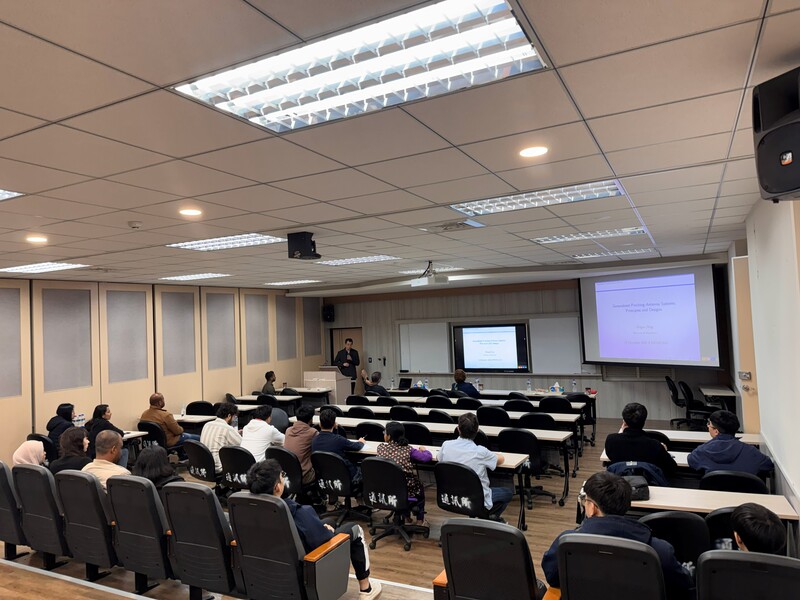
The IWS-6G 2025 (International Workshop Series on 6G) was successfully held on December 15–16, 2025, at National Sun Yat-sen University (NSYSU). Jointly organized by the 6G Communications and Sensing Research Center and the Institute of Communications Engineering, the two-day workshop brought together internationally renowned scholars to exchange ideas on the latest theoretical and practical advances toward next-generation 6G communication systems. Conducted in a hybrid format, the event enabled both on-site and online participation, fostering broad international academic engagement.
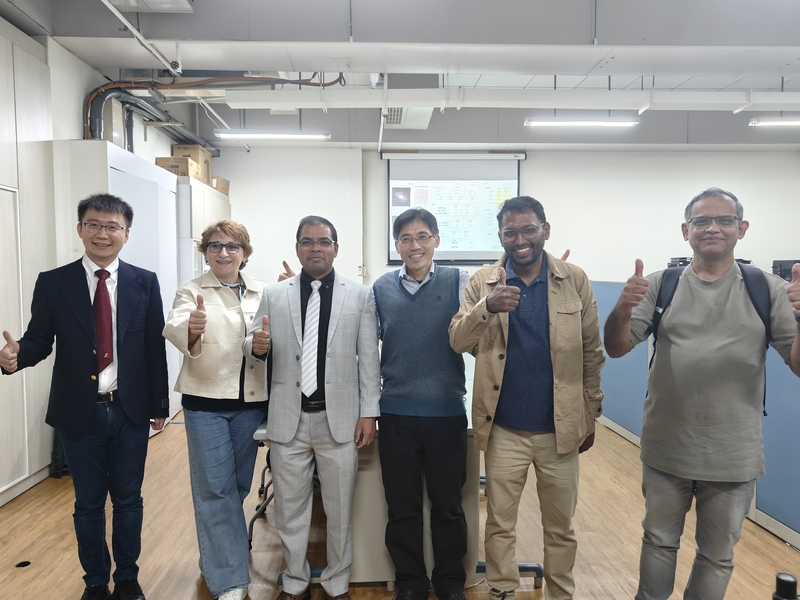
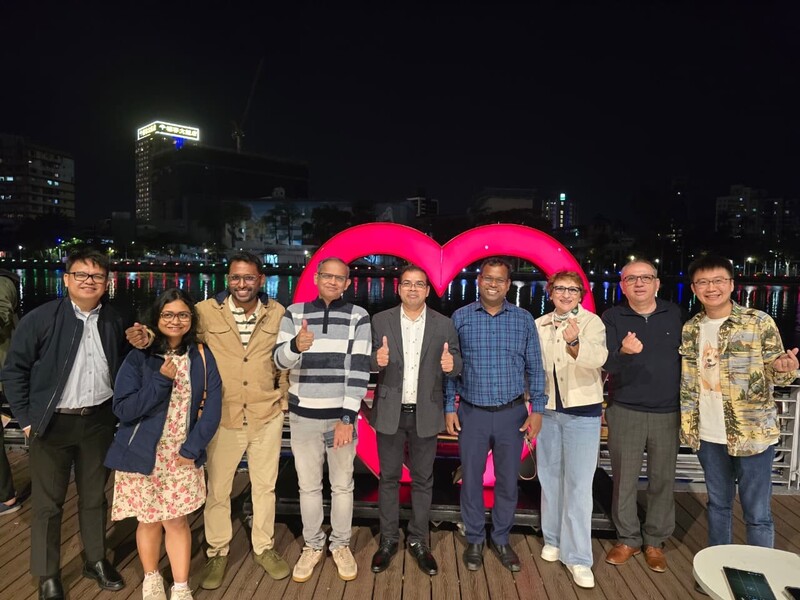
The workshop brought together seven distinguished invited keynote speakers, whose talks covered a broad spectrum of cutting-edge research topics at the forefront of 6G innovation, including Pinching-Antenna Systems (PASS), the convergence of wireless communications and quantum technologies, energy-aware massive Internet of Things, semantic communications, AI/ML-enabled 6G physical-layer design, and federated learning under communication impairments. These themes reflected the growing interdisciplinary nature of future communication systems and addressed key 6G requirements such as ultra-low latency, high reliability, energy efficiency, and intelligent operation. On the second day, a live technical demonstration will be presented by the Communication Technology Laboratory(CTL) led by Prof. Chao-Kai Wen of the National Sun Yat-sen University, will present a live technical demonstration. This will showcase a new-generation MIMO system based on the concept of user/terminal cooperation, highlighting the latest research advances in 6G physical-layer and system design.The event drew strong participation in both on-site and online formats, with 43 on-site and 298 online attendees on Day 1, followed by 39 on-site and 157 online attendees on Day 2. In addition to faculty members and students from our university, other international scholars were also present, including Prof. Gerald Arada (De La Salle University, Manila, Philippines), Dr. Aryan Kaushik (Chief Innovation Officer at RakFort, Ireland), and Dr. Adrian Dobre (Memorial University of Newfoundland, Canada), who attended the event in person to participate in the discussions and contribute to its success.
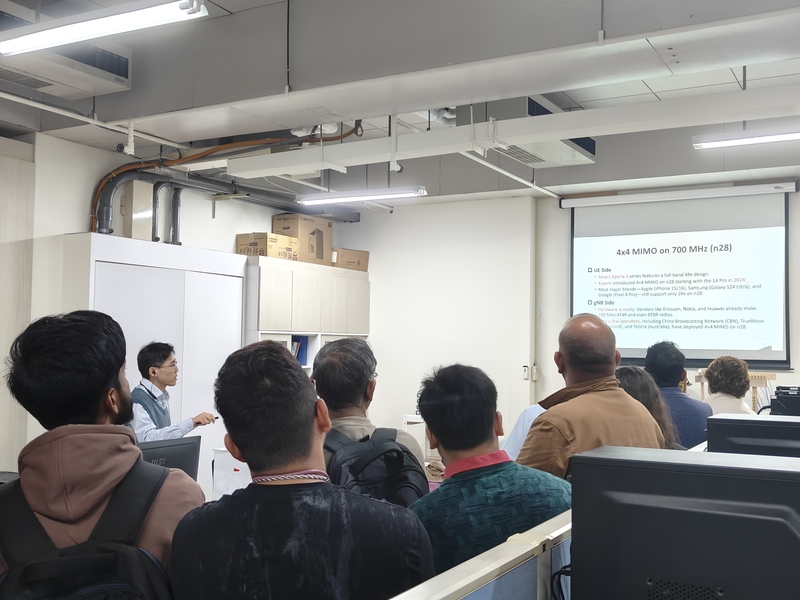
The first day opened with a keynote by Prof. Zhiguo Ding from The University of Manchester, who introduced Pinching-Antenna Systems as a new paradigm for wireless transceiver design. Drawing on a recently demonstrated prototype by NTT DOCOMO, the talk outlined the physical principles of pinching antennas and discussed their potential applications in integrated sensing and communication as well as nextgeneration multiple access. This was followed by a keynote from Prof. Octavia A. Dobre of Memorial University of Newfoundland, who explored how advances in wireless communications could be intertwined with quantum computing technologies to push network capabilities beyond 6G. Continuing the first day, Prof. Shankar Prakriya from the Indian Institute of Technology addressed the challenges posed by energy-constrained machine-type devices, emphasizing the fundamental trade-offs among battery lifetime, system capacity, delay, Age of Information, and security in massive machine-type communications. The day concluded with a keynote talk on the convergence of federated learning with communication distortions by Prof. Geoffrey Ye Li of Imperial College London, highlighting how practical impairments such as quantization, latency, and packet losses affect learning convergence and offering design insights for efficient wireless FL deployments.
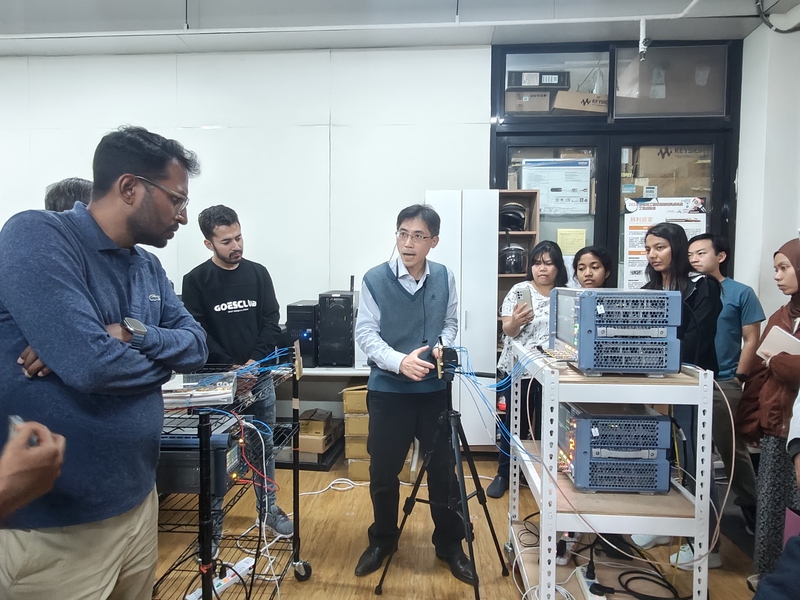
The second day began with Prof. Sudhan Majhi from The Indian Institute of Science Education and Research Bhopal, who discussed the role of AI and machine learning in 6G wireless communications. His talk demonstrated how AI/ML techniques could be applied to key physical-layer functions, including channel estimation, modulation classification, early ACK/NACK activation, and LDPC decoding, and outlined promising directions for future research. This was followed by Prof. Yuanwei Liu from The University of Hong Kong, who revisited Pinching-Antenna Systems (PASS) from a system-level perspective, introducing pinching beamforming achieved through dynamically adjustable antenna positions and highlighting its potential for efficient near-field communications. The workshop then turned to the quantum frontier, with Prof. Sudip Biswas from The Indian Institutes of Information Technology delivering a keynote on quantum foundations and next-generation communication applications. By bridging physics, computing, and wireless engineering, the talk illustrated how quantum technologies such as entanglement and quantum key distribution could underpin ultra-secure, ultra-reliable, and intelligent beyond-6G communication systems. The event concluded with a live technical demonstration and laboratory tour hosted by Prof. Chao-Kai Wen and the Communication Technology Laboratory (CTL) at NSYSU. The demonstration showcased a new-generation MIMO system based on user and terminal cooperation, providing participants with firsthand insight into recent advances in 6G physical-layer and system design.
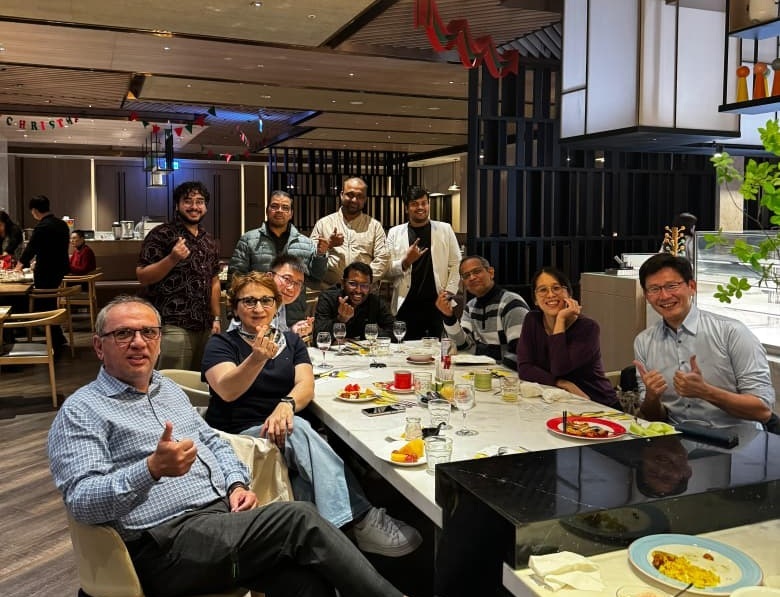
Overall, IWS-6G 2025 served as a vibrant platform for international collaboration and interdisciplinary exchange, reinforcing NSYSU’s role in advancing global research efforts toward the realization of future 6G communication systems.